The Morning Ritual That Saved My Confidence (And My Circulation)
We’ve all seen the “Clean Girl” morning routines—the lemon water, the meditation, the 5-mile runs. But for those of us living with leg swelling due to varicose veins, those routines often feel impossible. Instead of feeling energized, we wake up with legs that feel like they’re made of lead, dreading the “throb” that usually kicks in by lunchtime.
For years, I hid my legs in heavy jeans even in 90-degree heat. I felt like my body was aging faster than I was. But then I discovered the “Second Heart” theory, and everything changed.
If you’re tired of the heaviness, the swelling, and the “invisible burden” of vein disease, this is the high-niche ritual that stops the pain before it starts.
🌟 Top Recommended Exercises
These activities improve circulation without putting excessive strain on your vein walls.
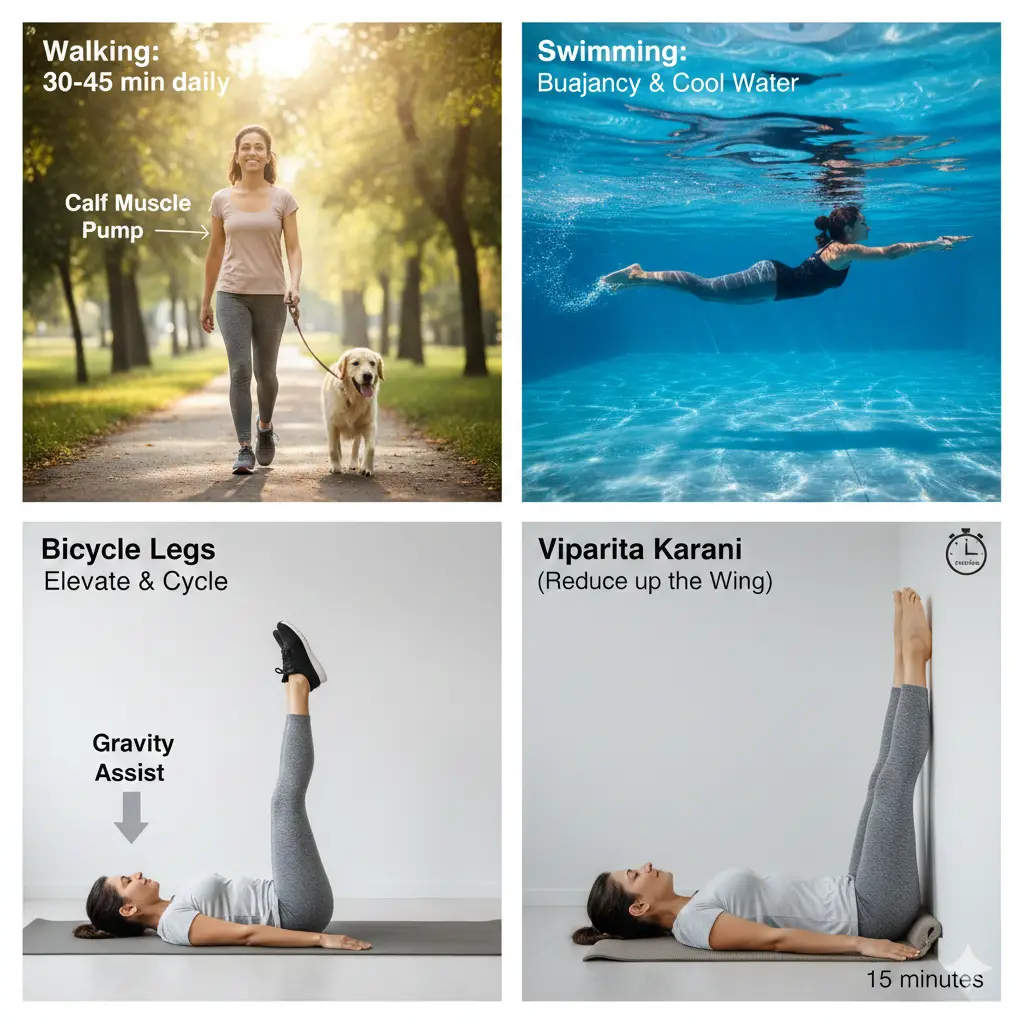
- Walking: The gold standard. Walking for 30–45 minutes daily helps contract the calf muscles, which acts like a “second heart” to move blood upward.
- Swimming: This is arguably the best exercise. The water’s buoyancy removes the weight from your legs, while the horizontal position and the cool water temperature naturally help shrink and soothe swollen veins.
- Bicycle Legs: Lie on your back, lift your legs, and mimic a cycling motion in the air. This uses gravity to help blood drain toward the heart.
- Yoga (Selected Poses): * Viparita Karani (Legs up the wall): Simply lying with your legs vertically against a wall for 15 minutes is a powerful way to reduce swelling.
- Mountain Pose (Tadasana): Helps with overall posture and limb stress.
- Calf Raises: Stand and slowly rise onto your tiptoes, then lower back down. Do 2–3 sets of 15 repetitions to strengthen the “muscle pump.”
⚠️ Exercises to Approach with Caution
Some popular workouts can actually increase the “pooling” of blood or cause further damage to weakened valves.
- Heavy Weightlifting: Squats and heavy leg presses increase intra-abdominal pressure, which can block blood from leaving the legs. If you do lift, use lighter weights and more repetitions.
- High-Impact Cardio: Running on hard concrete or intense jumping (like HIIT) can be jarring for sensitive veins. If you run, try soft surfaces like grass or a track.
- Abdominal Crunches: Similar to heavy lifting, intense core work can increase pressure in the abdomen and restrict blood flow from the legs.
💡 Pro-Tips for Vein Safety
- Wear Compression: If you are running or lifting, wearing medical-grade compression stockings can provide the external support your veins need.
- Elevate Post-Workout: After any exercise, lie down with your legs elevated above your heart for 15 minutes.
- Flex Your Feet: If you have to sit or stand for a long time, do ankle circles or foot pumps every 30 minutes to keep the blood moving.
- Breathe: Never hold your breath during exercise (the Valsalva maneuver), as this spike in internal pressure is particularly hard on leg veins.
🧘 Step 1: The 15-Minute “Gravity Reset”
Before I even check my phone, I do the Viparita Karani (Legs Up the Wall pose).
The Science: Gravity is usually your enemy, pulling blood down into weakened valves. By simply elevating your legs 90 degrees against the wall, you’re hitting the “reset” button. It encourages blood to flow back to your heart and drains the “pooling” fluid that causes that morning puffiness.
- The Ritual: 15 minutes, deep belly breaths, and a large glass of water. Proper hydration keeps your blood from “thickening,” making it easier for your veins to move.
🥣 Step 2: The “Anti-Inflammatory Bowl”
Breakfast isn’t just fuel; it’s vein-wall repair. My go-to is a mix of blueberries and chia seeds.
- Blueberries: These are packed with Anthocyanin. Think of it as “internal armor” for your blood vessels. It repairs damaged proteins in the vein walls, keeping them snappy instead of stretchy.
- Chia Seeds: The secret weapon here is Fiber. Why? Because constipation is a silent killer for varicose veins. The straining creates “intra-abdominal pressure” that literally blocks blood from leaving your legs. High fiber keeps the “pipes” clear and the pressure low.
🚶 Step 3: The “Calf-Pump” Walk (On Grass)
I’ve traded the high-impact concrete runs for a 30-minute rhythmic walk on soft grass.
The Science: Your calf muscle is technically your “Second Heart.” When it contracts, it squeezes your veins and shoots blood upward. Walking on a soft surface like grass reduces the “jarring” impact that can further damage delicate valves. It’s rhythmic, it’s low-impact, and it’s the most powerful thing you can do for your circulation.
🚫 The “Hidden Enemies” to Quit Today
To make this ritual work, you have to stop “feeding” the pressure. Here are the three things I cut out to find relief:
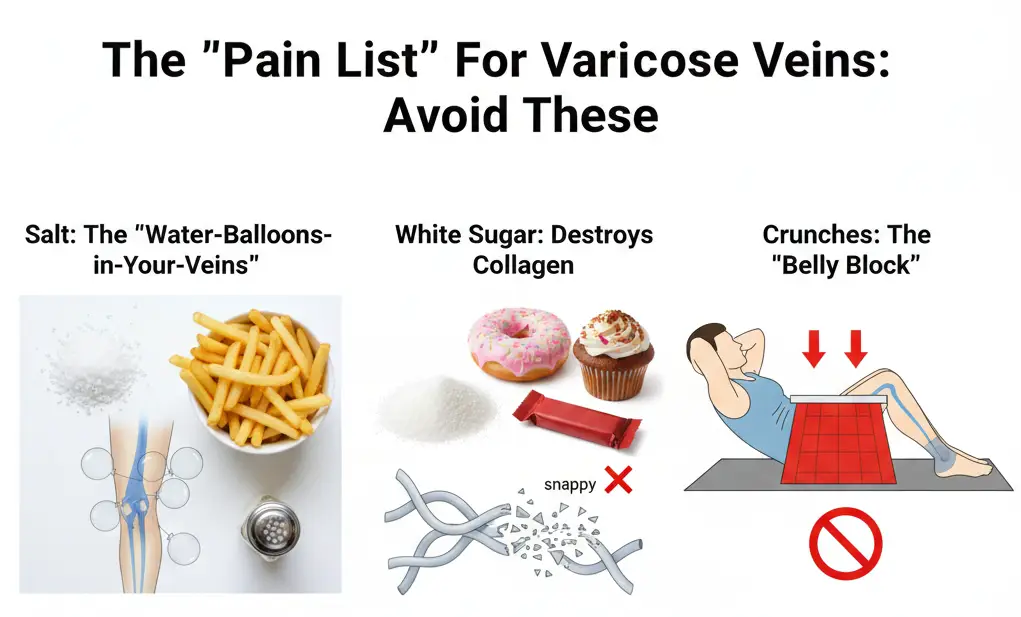
- The “Water Balloon” Effect (Salt): Excess sodium makes your body retain water, increasing your blood volume and putting massive stress on your veins.
- The “Collagen Killer” (Sugar): High sugar intake causes systemic inflammation, which weakens the collagen and elastin that keep your veins strong.
- The “Belly Block” (Crunches & Heavy Lifting): I stopped doing heavy squats and intense crunches. These create “back pressure” in the abdomen, which acts like a dam, trapping blood in your lower legs. Switch to bodyweight movements instead!
🌟 The Result?
By 5 PM, my legs no longer feel like they’re “throbbing.” The swelling has gone down, and I’ve stopped looking at my legs with resentment.
Healing isn’t about a “quick fix” surgery; it’s about how you treat your “second heart” every single morning.
🥗 The “Vein-Strong” Shopping List
Focus on these four pillars to support your vascular health:
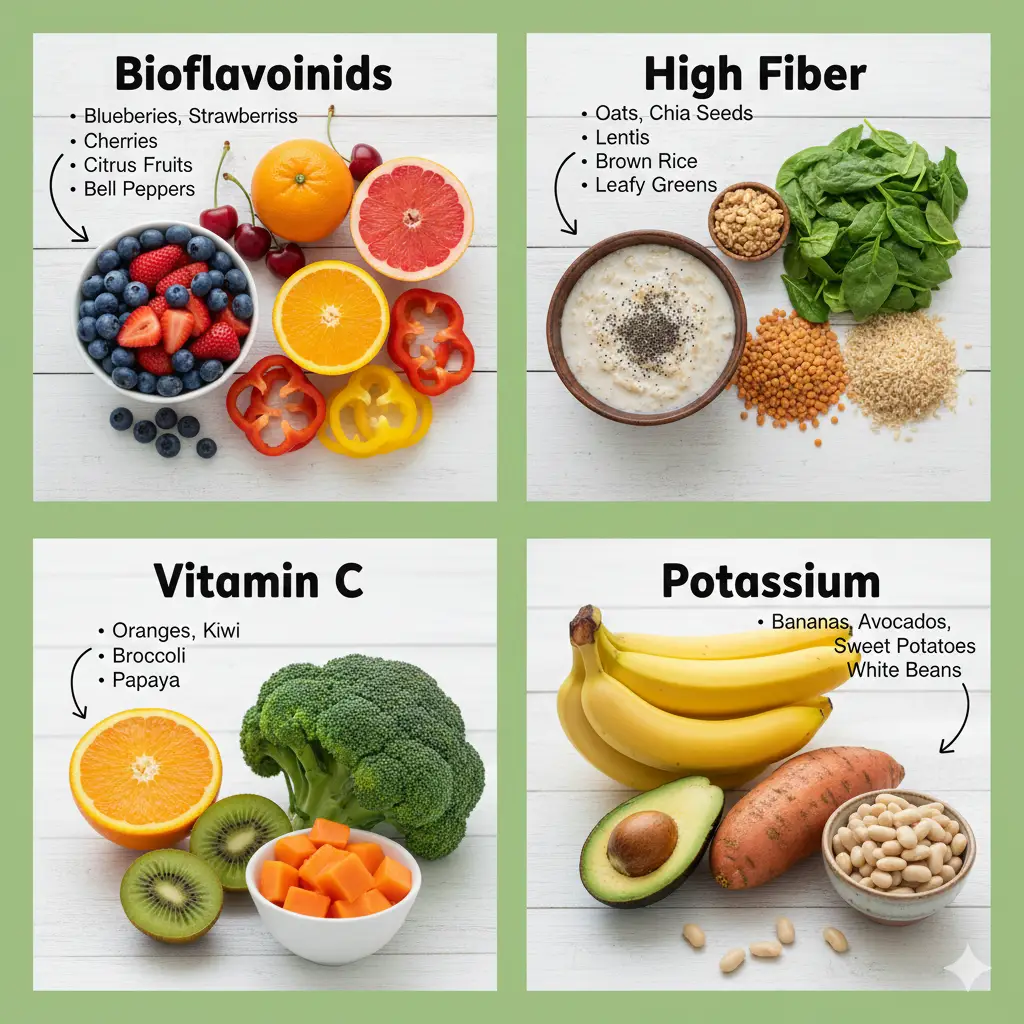
| Pillar | Why it Helps | Top Food Sources |
| Bioflavonoids | These give plants color and help strengthen vein walls so they don’t stretch or “leak” fluid into your tissues. | Blueberries, strawberries, cherries, citrus fruits, and bell peppers. |
| High Fiber | Prevents constipation. Straining during bowel movements creates “back pressure” in your leg veins, worsening the condition. | Oats, chia seeds, lentils, brown rice, and leafy greens. |
| Vitamin C | Vital for producing collagen and elastin, the “glue” that keeps your vein walls flexible and strong. | Oranges, kiwi, broccoli, and papaya. |
| Potassium | Helps your body flush out excess salt, which directly reduces the swelling (edema) in your ankles. | Bananas, avocados, sweet potatoes, and white beans. |
🚫 Foods to Minimize (The “Pressure” Group)
Certain foods cause your body to retain water or increase inflammation, putting a heavy load on your circulatory system.
- Excessive Salt: Sodium makes your body hold onto water. This extra fluid increases the total volume of your blood, putting massive pressure on already weakened vein valves.
- Refined Sugars: High sugar intake leads to weight gain and systemic inflammation, which can damage the delicate lining of your blood vessels.
- Alcohol: It acts as a vasodilator (widens vessels) and can lead to blood “pooling” in the legs, making veins feel heavier.
- Fried Foods: These can contribute to arterial plaque and sluggish circulation, making it harder for blood to make the journey back up to your heart.
🍽️ A Sample “Vein-Friendly” Day
- Breakfast: Oatmeal topped with blueberries, chia seeds, and a few walnuts (Fiber + Bioflavonoids + Omega-3s).
- Lunch: A large spinach salad with grilled salmon, avocado, and a lemon-olive oil dressing (Vitamin K + Potassium + Healthy Fats).
- Snack: An orange or a handful of almonds (Vitamin C + Vitamin E).
- Dinner: Roasted chicken with sweet potatoes and steamed broccoli (Lean Protein + Potassium + Collagen support).
- Hydration: Aim for 2–3 liters of water. Proper hydration keeps blood from “thickening,” making it easier to pump.